Municipal
Beyond Miyawaki: The Limits of Tree Planting in Indian Cities
Urban forests are among the best things an Indian city can build. They are also slow, land-hungry and hard to site where pollution is worst. Understanding those limits is what makes a layered strategy possible.
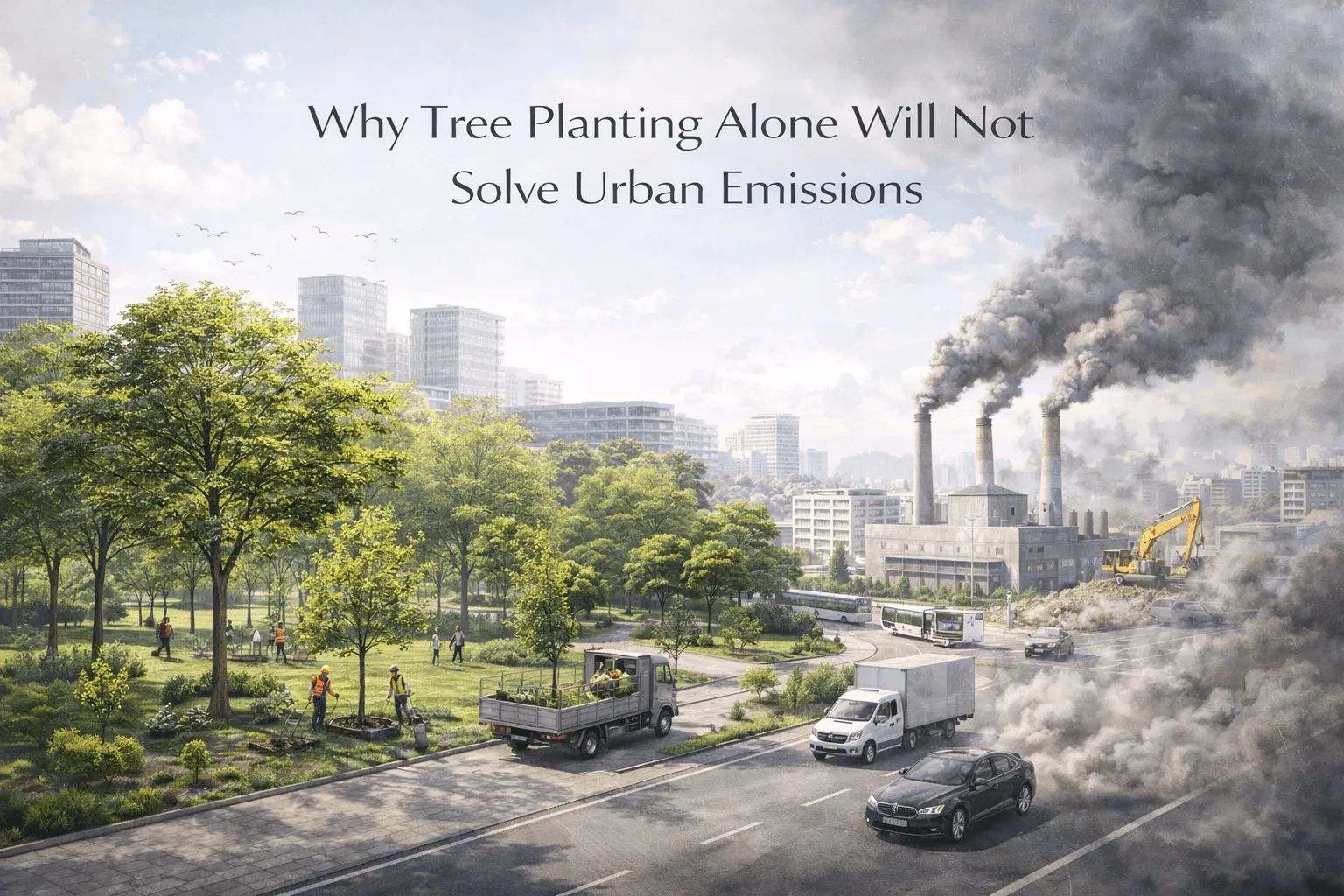
Almost every Indian city with a clean air action plan has a plantation programme, and a large share of them now use the Miyawaki method — densely planted native species on small plots, designed to reach canopy far faster than conventional planting. Municipal corporations in Mumbai, Chennai, Bengaluru, Ahmedabad and dozens of smaller cities have created hundreds of such patches.
This is good work and it should continue. Urban forests deliver biodiversity, shade, stormwater absorption, heat island reduction and psychological benefit that no engineered system provides. Nothing in this article argues against them.
What it argues is that plantation alone cannot carry the weight that Indian clean air plans currently place on it, and that being precise about why is the precondition for building a strategy that works.
Three constraints, none of them about effort
Time
A sapling is not a carbon sink. It becomes one gradually. Sequestration capacity scales roughly with biomass, which means the first several years contribute very little, and meaningful absorption arrives somewhere in the second or third decade.
Miyawaki compresses the canopy timeline substantially — dense planting and soil preparation can produce closed canopy in a handful of years rather than fifteen. But canopy closure is a light and structure milestone, not a sequestration one. The carbon story still runs on tree time.
For a city reporting against a 2026 target, a plot planted in 2026 contributes essentially nothing to that target.
Land
This is the binding constraint, and it is not evenly distributed.
Pollution exposure in Indian cities concentrates along arterial roads, around industrial clusters, at construction sites and in dense commercial cores. Available municipal land concentrates at the periphery, in and around landfills, along drainage reserves, and on institutional campuses.
These two maps do not overlap. Cities plant where they can, which is rarely where the exposure is.
Survival
Plantation survival rates in Indian urban programmes vary enormously — well-maintained Miyawaki patches with committed irrigation and guardianship do well; large-number drives without maintenance budgets often do not. Independent audits of afforestation programmes have repeatedly found survival substantially below planting figures.
The failure mode is structural rather than negligent. Planting is a one-time capital event with a photograph attached; maintenance is a recurring operational cost with no photograph. Municipal budgeting is far better at the first than the second.
What the numbers actually compare
It is worth being careful here, because the comparison is frequently made badly in both directions.
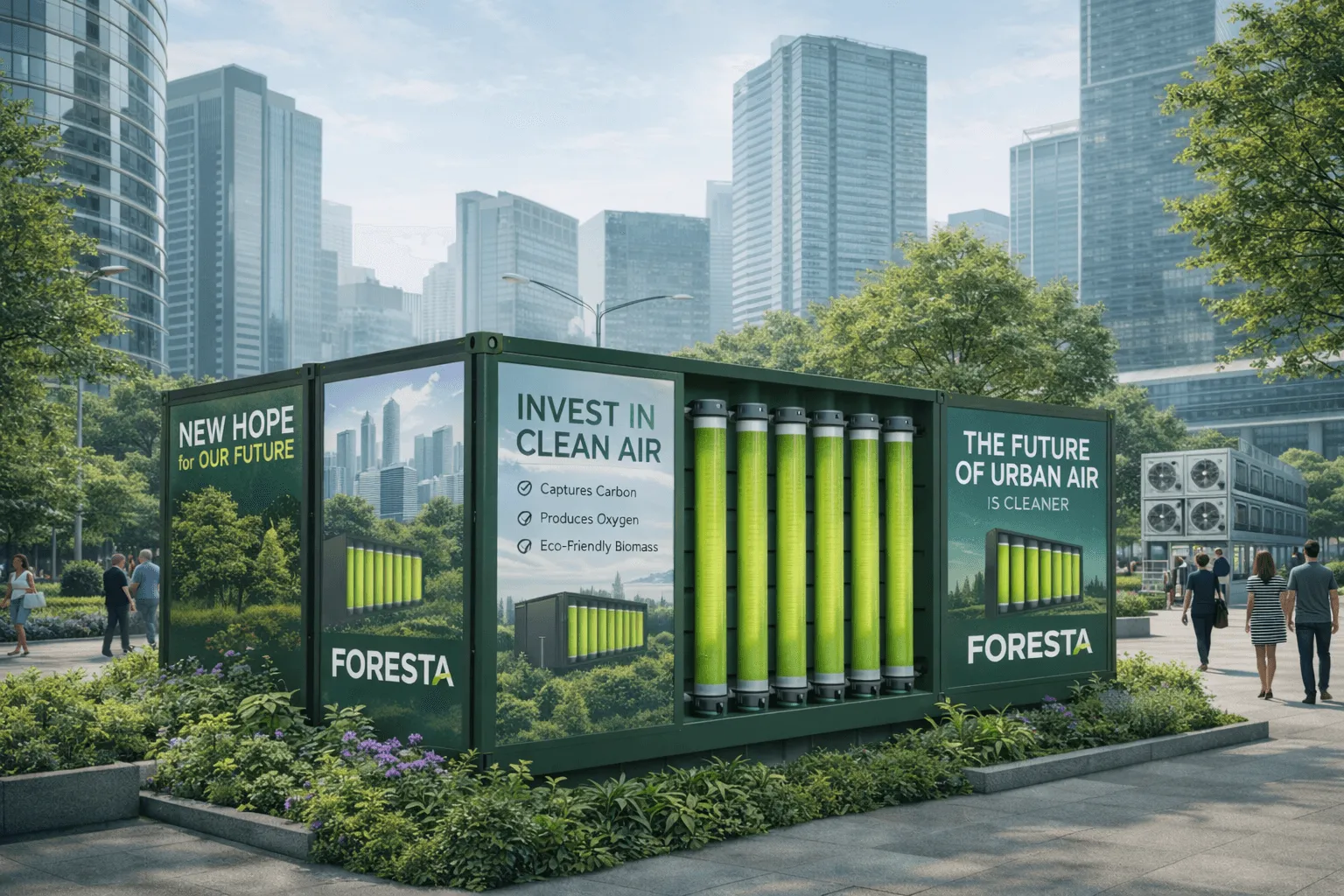
A single Foresta CTRX unit is specified at 700–800 mature-tree equivalence on a 14.4 m² footprint. The temptation is to read that as “one container beats a forest”. It does not, and framing it that way invites justified scepticism.
The honest comparison is narrower and more useful:
| Urban forest plot | Deployable unit | |
|---|---|---|
| Time to full capacity | 15–25 years | Days |
| Land required | Hectares | Square metres |
| Sitable in dense core | Rarely | Yes |
| Co-benefits | Biodiversity, shade, water, amenity | Biomass output, data |
| Ongoing cost | Maintenance, irrigation, protection | Service, harvest, power |
| Failure mode | Sapling mortality | Mechanical downtime |
| Attributable data | Difficult | Per-unit logging |
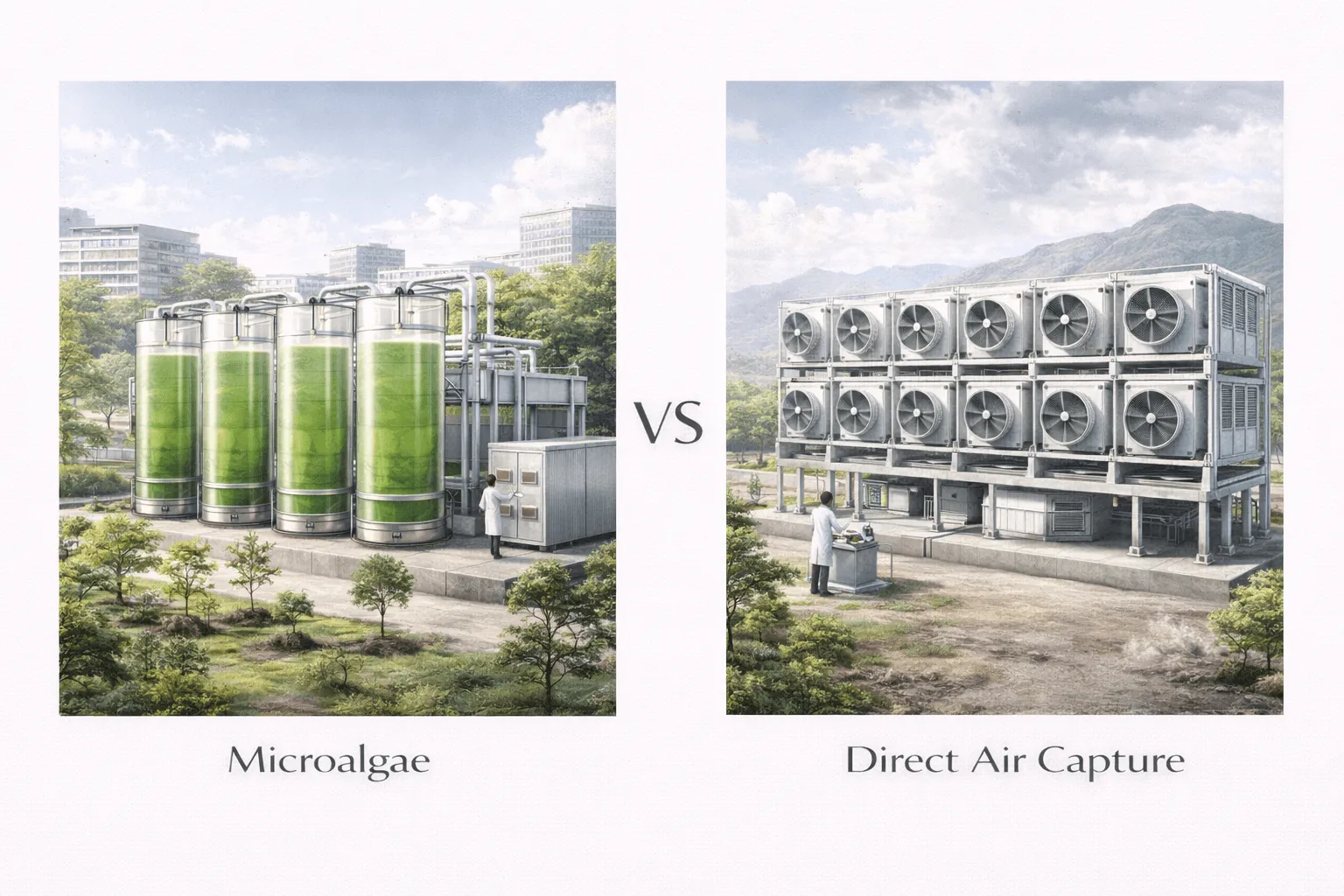
A forest wins decisively on co-benefits and on cost at scale where land is free. A deployable unit wins decisively on siting, speed and auditability. They are not competing for the same job.
The layered approach
Cities that get this right treat the two as different instruments in the same portfolio:
- Plant for the long term, on land you actually have. Peripheral plots, campus land, drainage reserves, degraded sites. Budget for maintenance, not just planting, and report survival rather than sapling counts.
- Deploy engineered capture where exposure is highest and land is unavailable. Traffic intersections, transit interchanges, hospital forecourts, school frontages, industrial estate boundaries.
- Keep source control as the primary lever. Neither of the above substitutes for fuel standards, industrial compliance, construction dust rules and modal shift. Both are supplements.
- Report all three against the same instrumented baseline, so the contribution of each is separable.
Where the two combine well
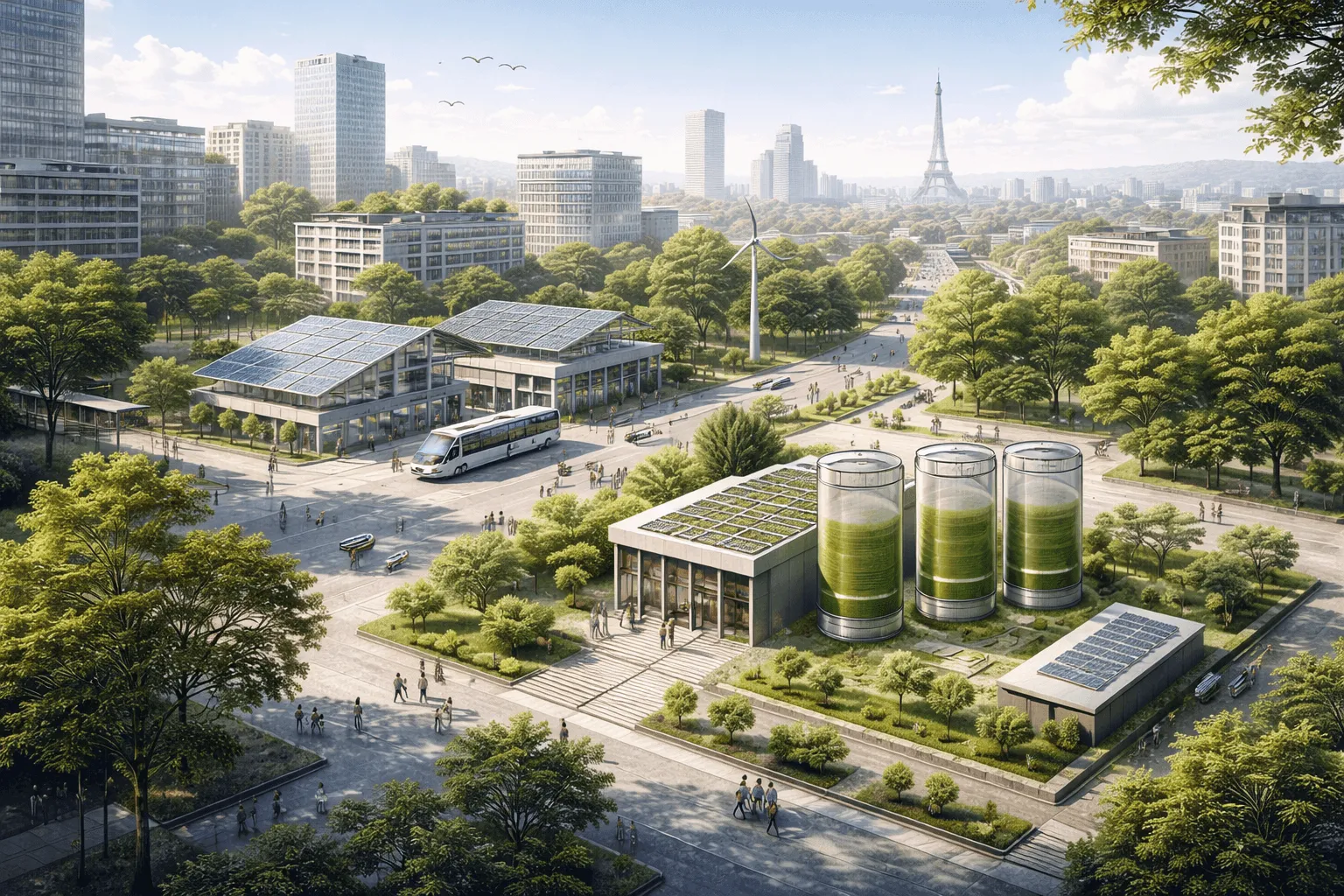
Some of the most interesting Indian deployments will be hybrid. A Miyawaki patch on the available land at the edge of a school campus, paired with units at the frontage where children queue at drop-off and where vehicle idling concentrates exposure. A plantation belt around an industrial estate, with containerised capture at the point sources inside it.
The plantation delivers the long-term ecological outcome. The units deliver measurable reduction at the point of exposure, now, and produce the data that justifies continued funding for both.
Urban forests are the right long-term answer for Indian cities. The difficulty is that Indian cities are being asked to show results on a timescale that forests, by their nature, cannot meet — and in locations where forests, by their footprint, cannot go.
Conclusion
Miyawaki plantations are among the better things Indian municipal bodies have done on air quality in the last decade, and the enthusiasm behind them is well placed. But treating plantation as the whole strategy places on it a burden of speed, siting and measurability that no plantation method can carry.
The realistic position is unglamorous: plant for 2045, deploy for 2027, and regulate sources throughout. A city that does all three, and reports each separately against instrumented data, will be able to demonstrate progress in a way that a city relying on sapling counts alone will not.